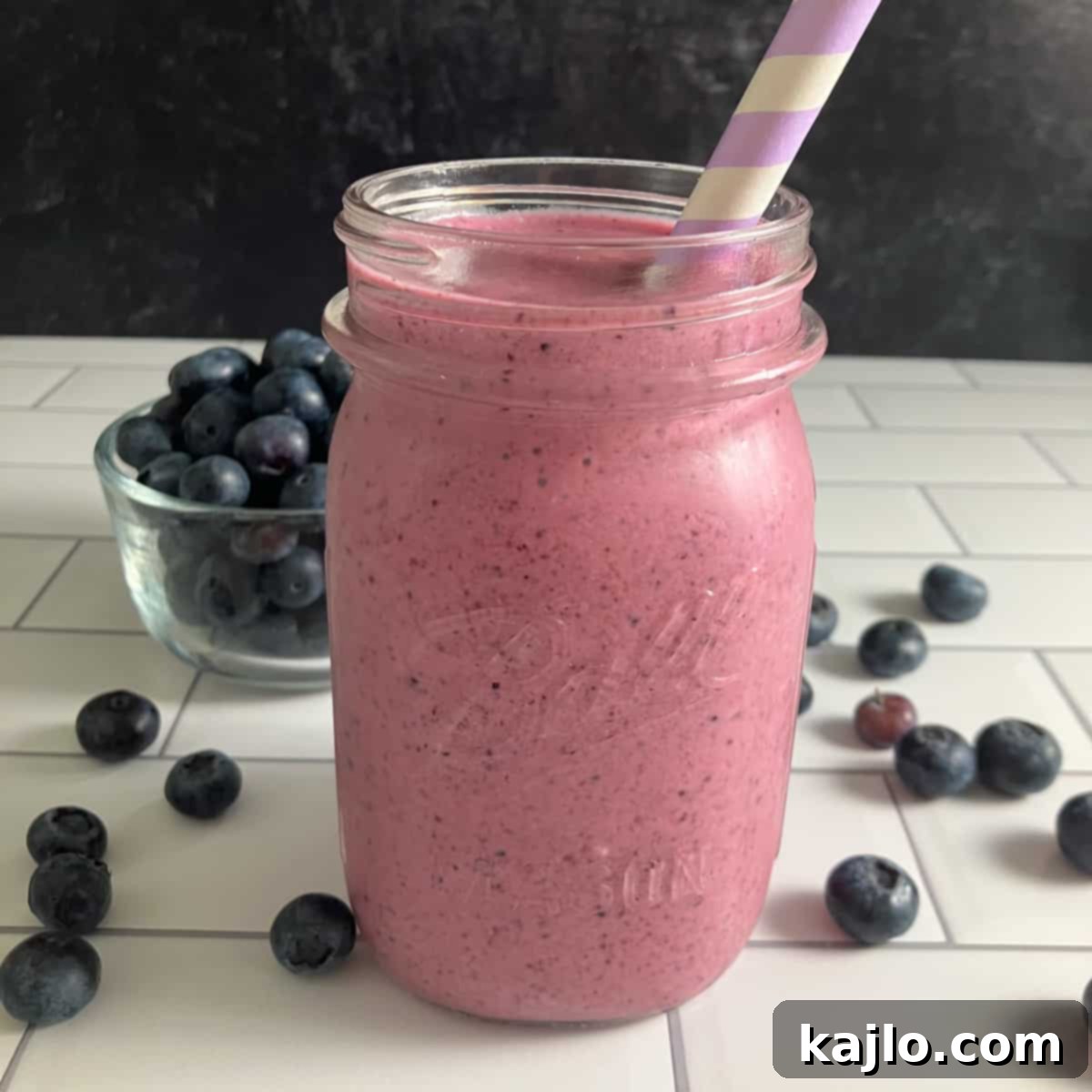
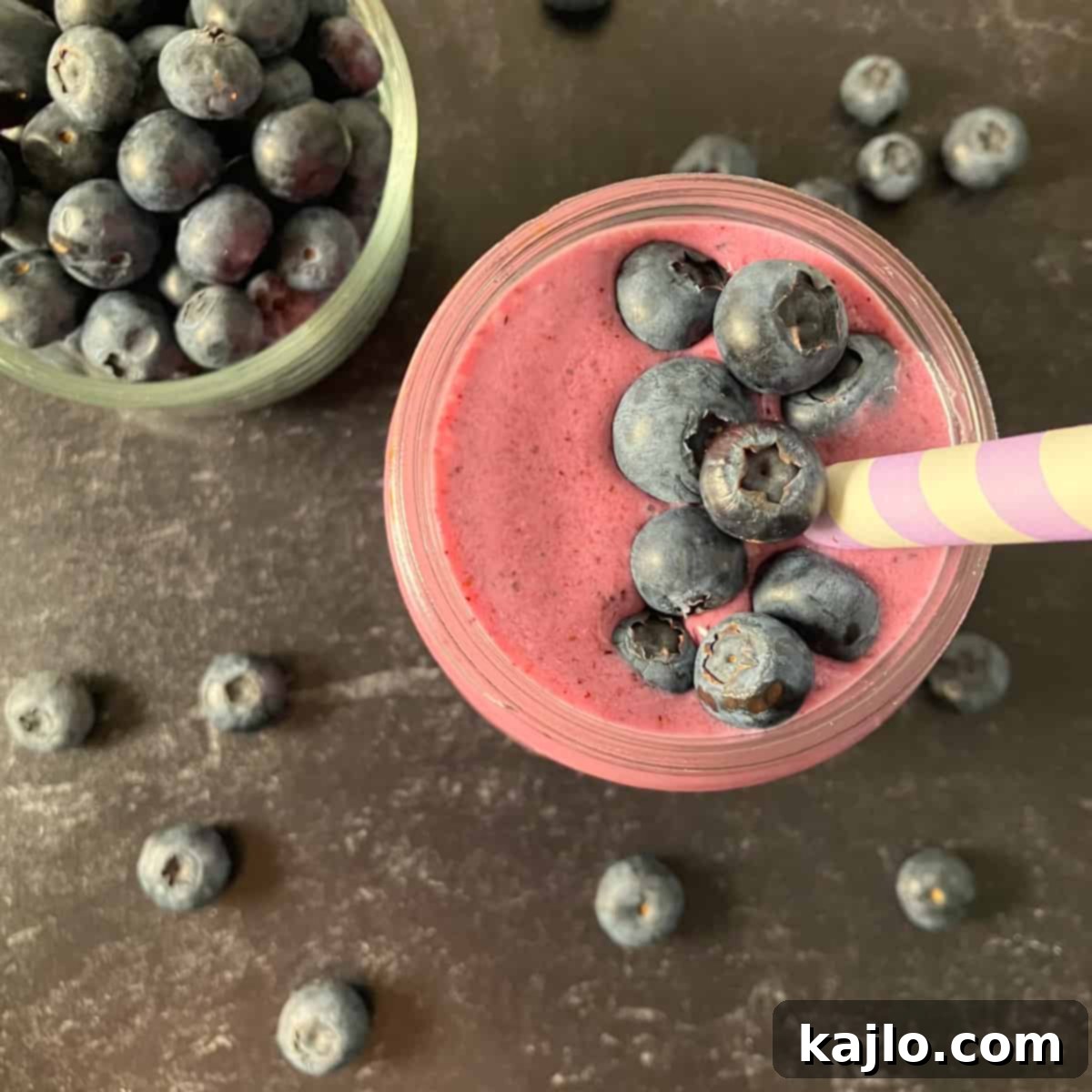
Are you searching for the perfect way to cool down this summer while nourishing your body? Look no further than this incredibly refreshing peach blueberry smoothie! Bursting with the vibrant flavors of in-season peaches and juicy blueberries, this drink offers a delightful escape from the heat. But it’s more than just a tasty treat; we’ve included a secret ingredient to elevate its nutritional profile, providing extra protein and creaminess without compromising on taste. Plus, with options to sweeten naturally and even add a subtle hint of lavender, this blueberry peach smoothie recipe is designed to be a healthy snack or light meal that the entire family will adore. You’ll love how simple it is to whip up a batch, ensuring you can enjoy a wholesome, fiber-rich beverage anytime you desire. Say goodbye to sugary store-bought options and embrace this homemade gem!
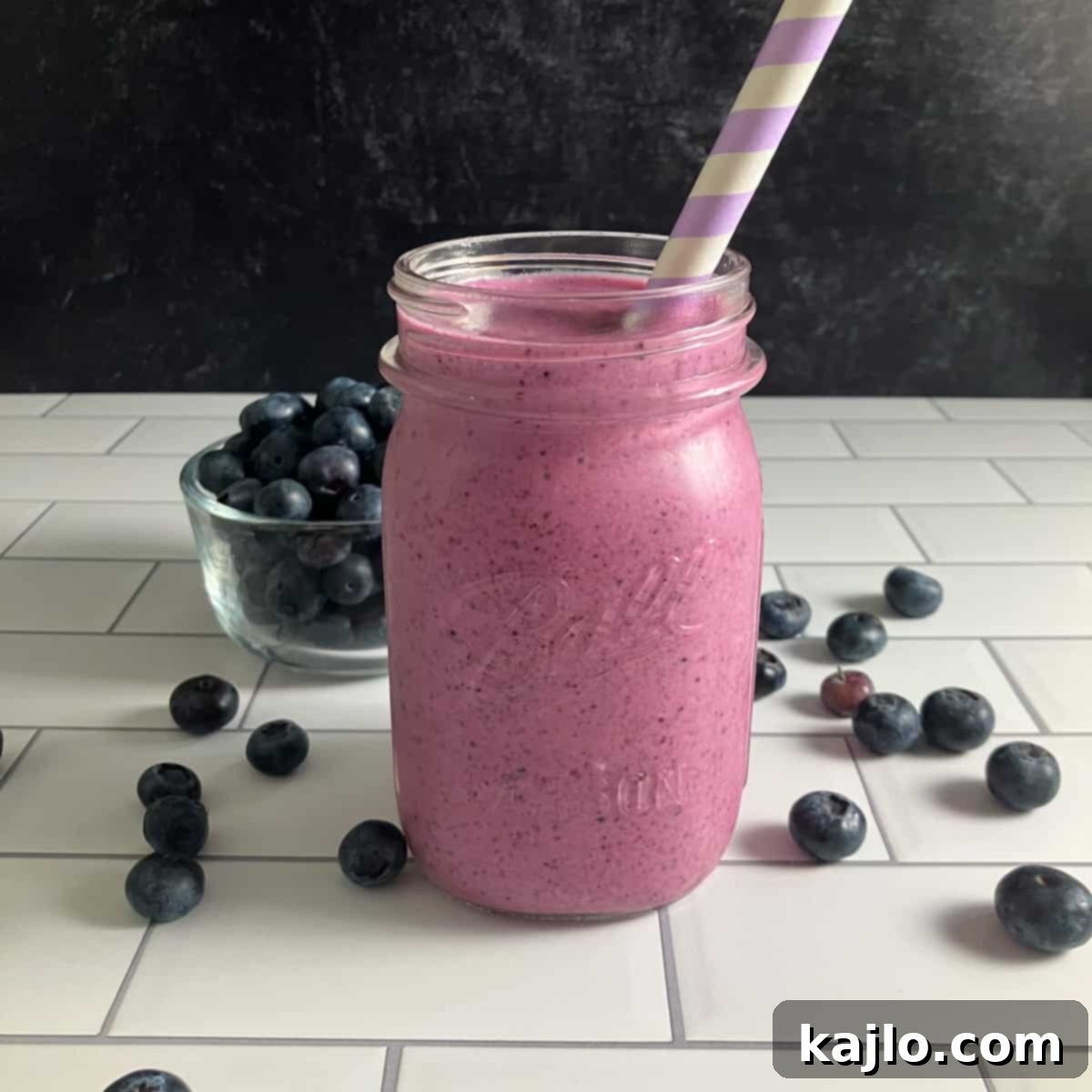
The question often arises: Do peaches and blueberries go together in a smoothie? The resounding answer is a delicious “Yes!” This particular peach and blueberry smoothie is living proof that these two summer fruits are a match made in culinary heaven. Their complementary sweetness and tartness create a balanced flavor profile that is both invigorating and satisfying. The natural sugars from these whole fruits provide a gentle sweetness, eliminating the need for excessive added sugars often found in commercial smoothie blends.
What makes this particular recipe stand out? This peach blueberry smoothie without yogurt cleverly incorporates the same ingredient you’ll find in my popular keto blueberry smoothie to craft a surprisingly high-protein beverage: cottage cheese. Yes, we’re bringing back this incredibly versatile dairy product, and for good reason!
I understand that the idea of adding cottage cheese to a smoothie might sound a bit unconventional at first. However, trust me on this – as long as you blend it thoroughly, its texture completely disappears, leaving behind only a delightful creaminess and a significant protein boost. The key is to ensure your blender or food processor works its magic to achieve that perfectly “smooth” consistency. This makes it an excellent choice for a peach blueberry protein smoothie that’s both nutritious and irresistibly smooth.
If you’re as enamored with the peach and blueberry combination as I am, you might also be keen to try my peach blueberry overnight oats. This delightful pairing can truly transform your breakfast routine, making you look forward to every morning meal!
🍑 The Abundant Benefits of This Peach Blueberry Smoothie
This isn’t just any smoothie; it’s a powerhouse of nutrition designed to be a substantial snack or even a light breakfast. Here are some of the key benefits you’ll enjoy when you whip up this delectable peach blueberry smoothie recipe:
- Naturally Sweet with No Added Sugar Options: You have the freedom to skip refined sugars, brown sugar, honey, maple syrup, or fruit concentrates entirely. This smoothie can be sweetened purely with natural alternatives like sugar-free maple syrup or Medjool dates. We’ll explore the specific details for each option within the recipe section below, empowering you to choose what best fits your dietary goals.
- Packed with Whole Blended Fruits: Unlike many fruit juices that strip away essential fiber, this recipe utilizes whole peaches and blueberries. This ensures you get all the dietary fiber, which is crucial for digestive health and satiety, along with a rich array of antioxidants. Both peaches and blueberries are renowned for their vitamin C content, and peaches also offer provitamin A, contributing to overall well-being.
- Effortlessly Easy to Prepare: Simplicity is a cornerstone of this recipe. All you need to do is toss all the ingredients into a high-speed blender or food processor and blend until silky smooth. There’s no tedious chopping or peeling of fruit required, making it a perfect option for busy mornings or a quick pick-me-up.
- Budget-Friendly Goodness: If you’re tired of paying nearly $6 for a similar drink, like the Panera Peach Blueberry Smoothie with Almond Milk, this homemade version offers significant savings. Frozen fruits, the stars of this recipe, are typically cost-effective year-round. This means you don’t have to wait for peak season to enjoy the fresh taste of summer fruits in your smoothie.
- Naturally Gluten-Free & Adaptable: This peach smoothie is inherently gluten-free, making it suitable for those with sensitivities or celiac disease. Furthermore, I’ve included valuable tips in the FAQs section to easily adapt this recipe to be dairy-free or entirely vegan, catering to various dietary preferences.
- A Unique Lavender Infusion (Optional): For those seeking an elevated flavor experience, a touch of culinary lavender adds a sophisticated and subtly fragrant note to this blueberry lavender smoothie recipe. While research on lavender’s calming or stress-reducing properties is still developing, its distinct taste can transform this smoothie into a gourmet delight. Feel free to experiment with this ingredient or omit it if you prefer a classic fruit flavor.
The core philosophy behind this smoothie is to combine nutrient-dense ingredients while consciously avoiding sources of empty calories. Most importantly, it had to pass the ultimate test: the family taste test. I’m confident you’ll agree that one of the greatest advantages of this peach blueberry smoothie is its undeniable deliciousness!
⭐ Essential Blueberry Peach Smoothie Ingredients
With a well-stocked freezer, you might find that you already have most of what you need to create this fantastic smoothie. Here’s a breakdown of the simple ingredients required to make a truly delightful smoothie with peaches and blueberries:
- Frozen Blueberries: Opting for frozen blueberries is key. They provide a wonderful chill and contribute to the thick, creamy texture without diluting the flavor. Plus, frozen berries are often more economical and available year-round.
- Frozen Peaches: Similar to blueberries, frozen peaches are ideal for creating a frosty smoothie. They blend into a smooth consistency and offer that unmistakable sweet, summery peach flavor.
- Cottage Cheese: This is our secret weapon for adding a significant protein boost and an incredibly creamy texture. Don’t worry, once blended, you won’t detect any curds, just pure smoothness.
- Ice Cubes: Essential for achieving that perfectly cold and thick smoothie consistency. Adjust the quantity based on your desired thickness.
- Cold Water: Used to help the ingredients blend smoothly and reach the ideal drinkable consistency. You can adjust the amount depending on how thick or thin you prefer your smoothie.
- Maple Syrup (or Sugar-Free Syrup): This is an optional sweetener. For those looking to avoid added sugars, a high-quality sugar-free syrup works wonderfully. If using natural maple syrup, ensure it’s pure maple syrup for the best flavor.
- Culinary Lavender (Optional): A small amount of food-grade dried lavender adds a sophisticated and aromatic twist. It’s a unique addition that can elevate the smoothie’s flavor profile, but feel free to skip it if it’s not to your taste.
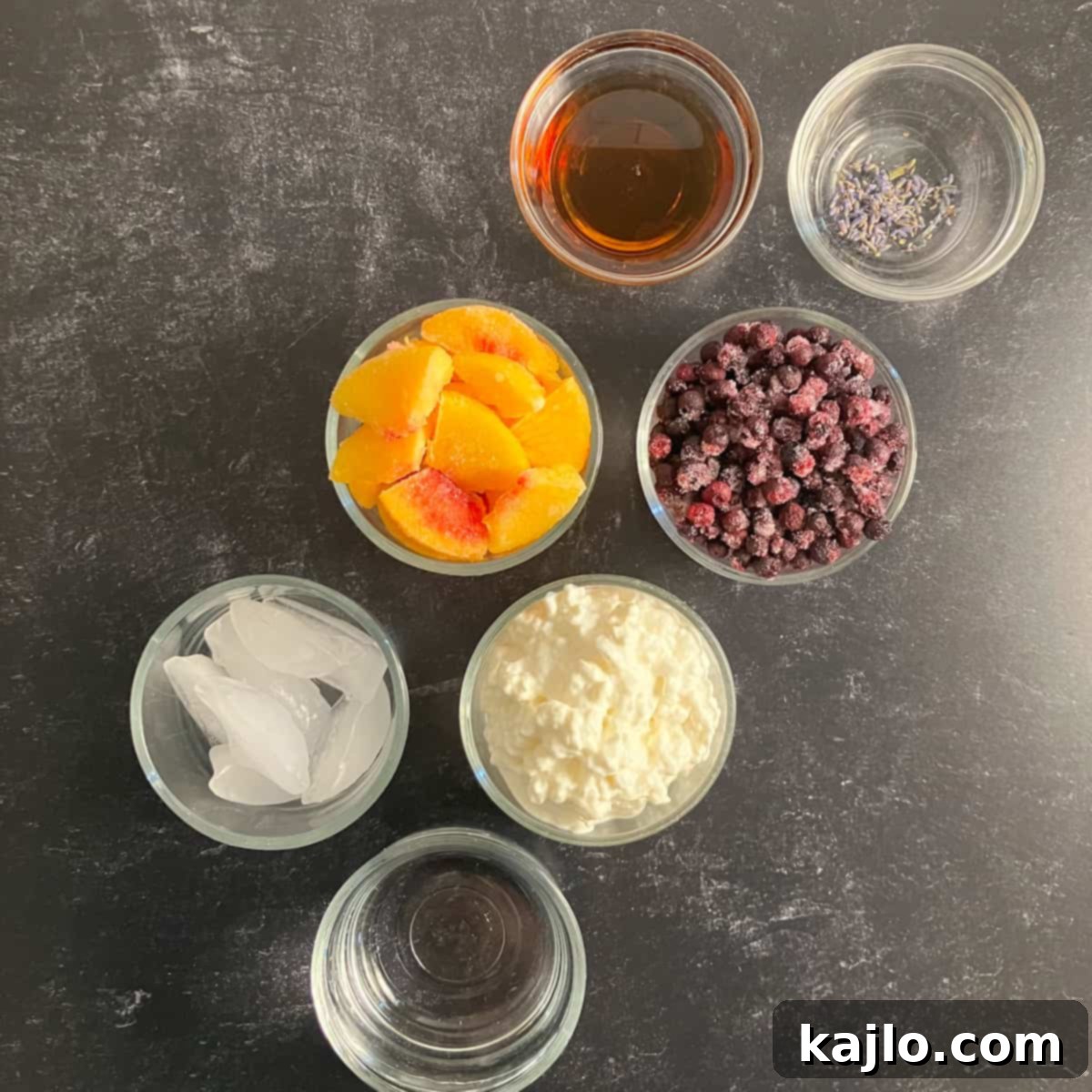
Specific quantities for each ingredient are provided in the detailed recipe card further down the page, ensuring you have everything you need to recreate this delicious drink.
For the ultimate creamy indulgence, I highly recommend using full-fat cottage cheese (specifically 4% milkfat) in this recipe. The higher fat content contributes significantly to the luxurious texture of the smoothie. If you’re fortunate enough to find cottage cheese with an even higher cream content (around 6% milkfat), it will yield an even more decadent and velvety smooth result.
If you prefer a whole food, natural sweetener alternative to maple syrup, Medjool dates are an excellent choice. Simply pit three Medjool dates, soak them in three tablespoons of boiling water for about 10 minutes to soften, then blend them (along with the soaking water) into a smooth date paste. This paste can then be used as a wholesome substitute for the maple syrup, adding natural sweetness and a touch more fiber.
The edible culinary lavender I use for this unique peach blueberry smoothie can often be found in specialty spice shops or online. You can typically find it on Amazon. Don’t hesitate to embark on this delightful culinary adventure and experience the subtle floral notes it brings to your smoothie!
Regarding equipment, while a high-powered blender certainly gets the job done, I personally find that a food processor often does a superior job of blending smoothies to a truly smooth consistency, especially when dealing with frozen fruits and cottage cheese. They tend to break down ingredients more evenly. Moreover, food processors are typically a more cost-effective investment compared to many high-end blenders, making this delicious smoothie accessible to everyone.
🫐 How to Make the Perfect Peach Blueberry Smoothie
Creating this delightful peach blueberry smoothie is incredibly straightforward. Follow these simple steps for a refreshing treat:
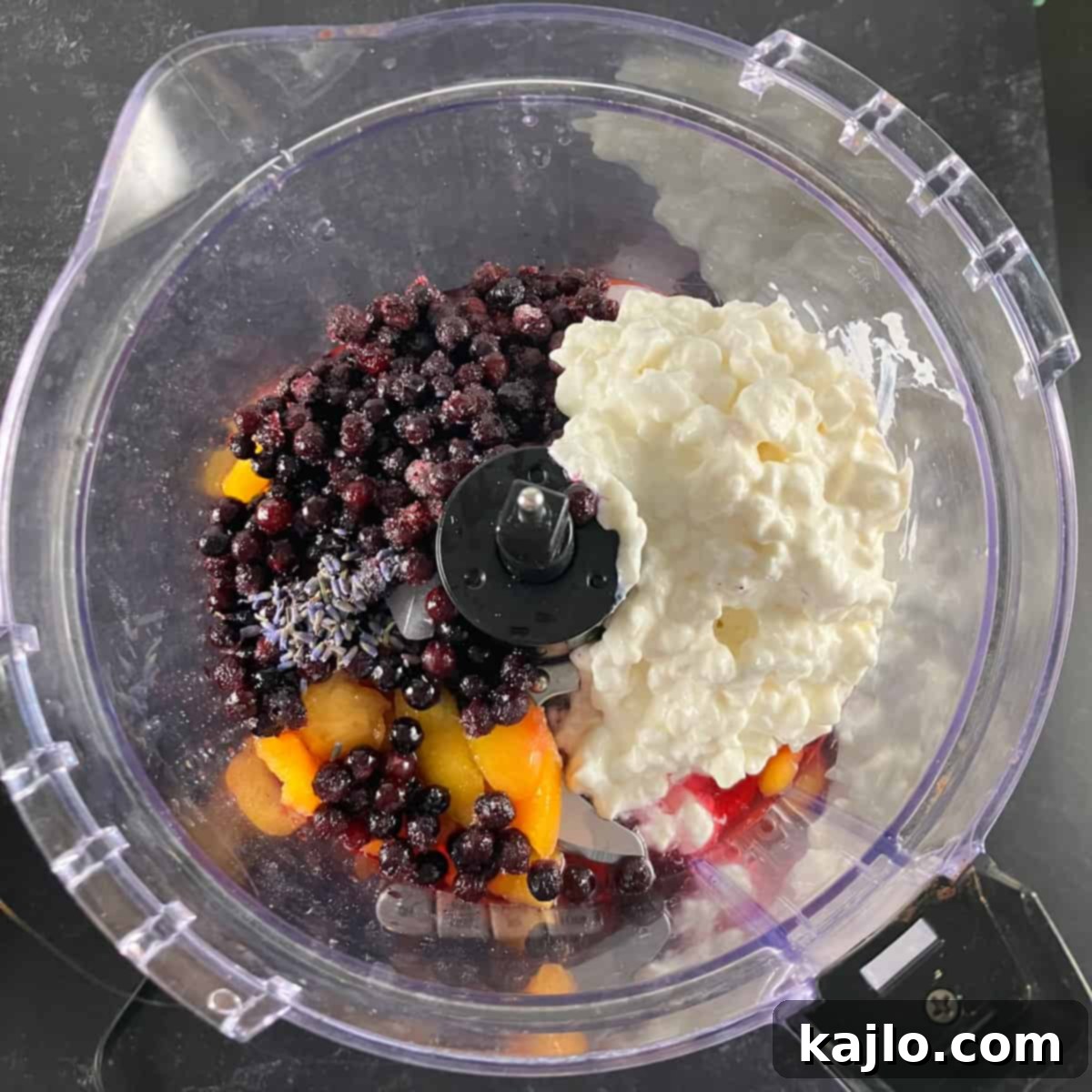
Combine all your ingredients in a food processor or high-speed blender. Add the frozen blueberries, frozen peaches, cottage cheese, cold water, ice cubes, maple syrup (or your chosen sweetener), and the optional culinary lavender. Blend everything together until the mixture is completely smooth and creamy. It’s crucial to blend for a little longer than you might typically for other smoothies, ensuring that the cottage cheese is fully incorporated and the ice is pulverized, leaving no grittiness behind.
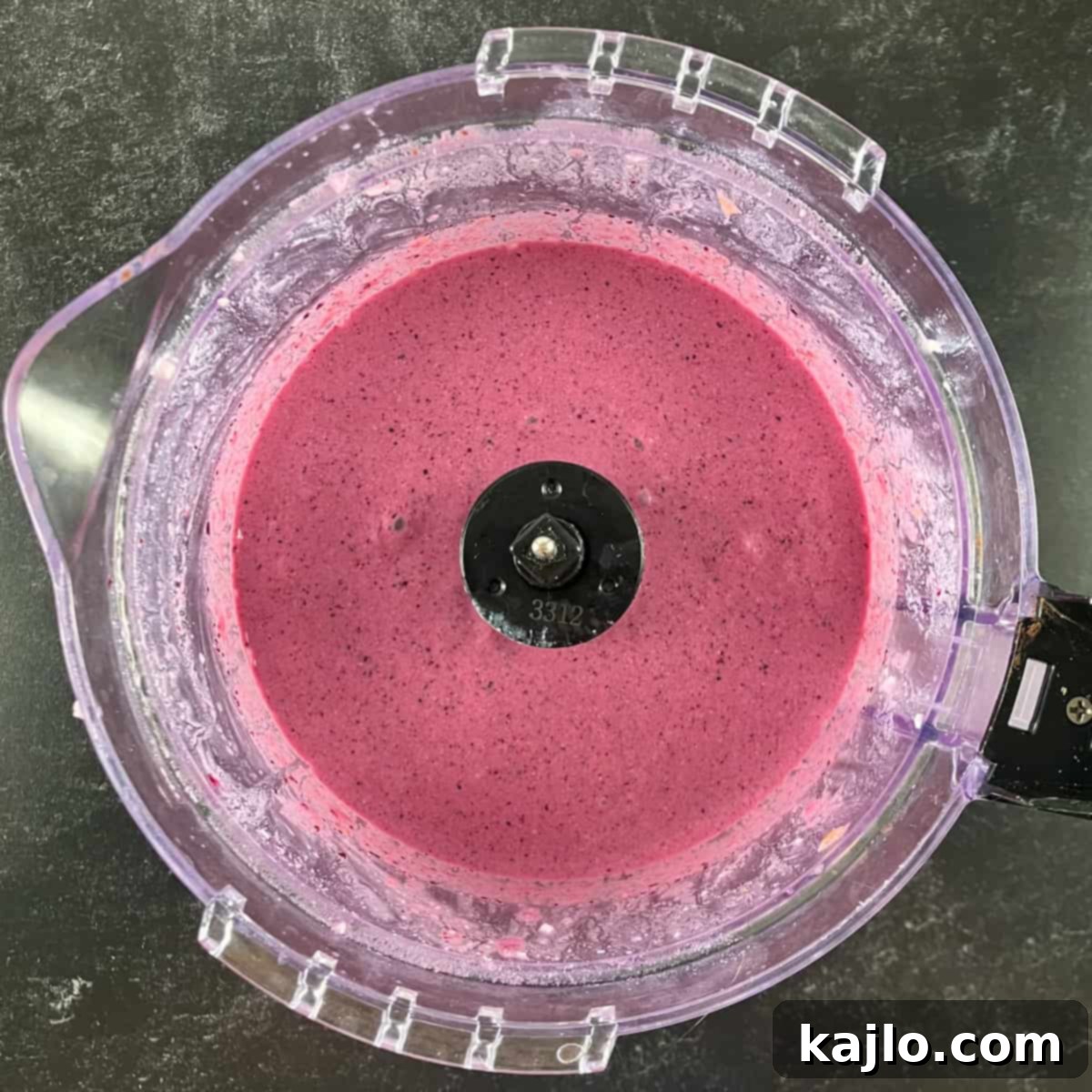
Once blended, taste the smoothie. If you prefer a sweeter profile, you can add an additional tablespoon of maple syrup or your preferred sweetener. Personally, I often find the natural sweetness of the fruits sufficient, but this option is there for those who enjoy a richer sweetness.
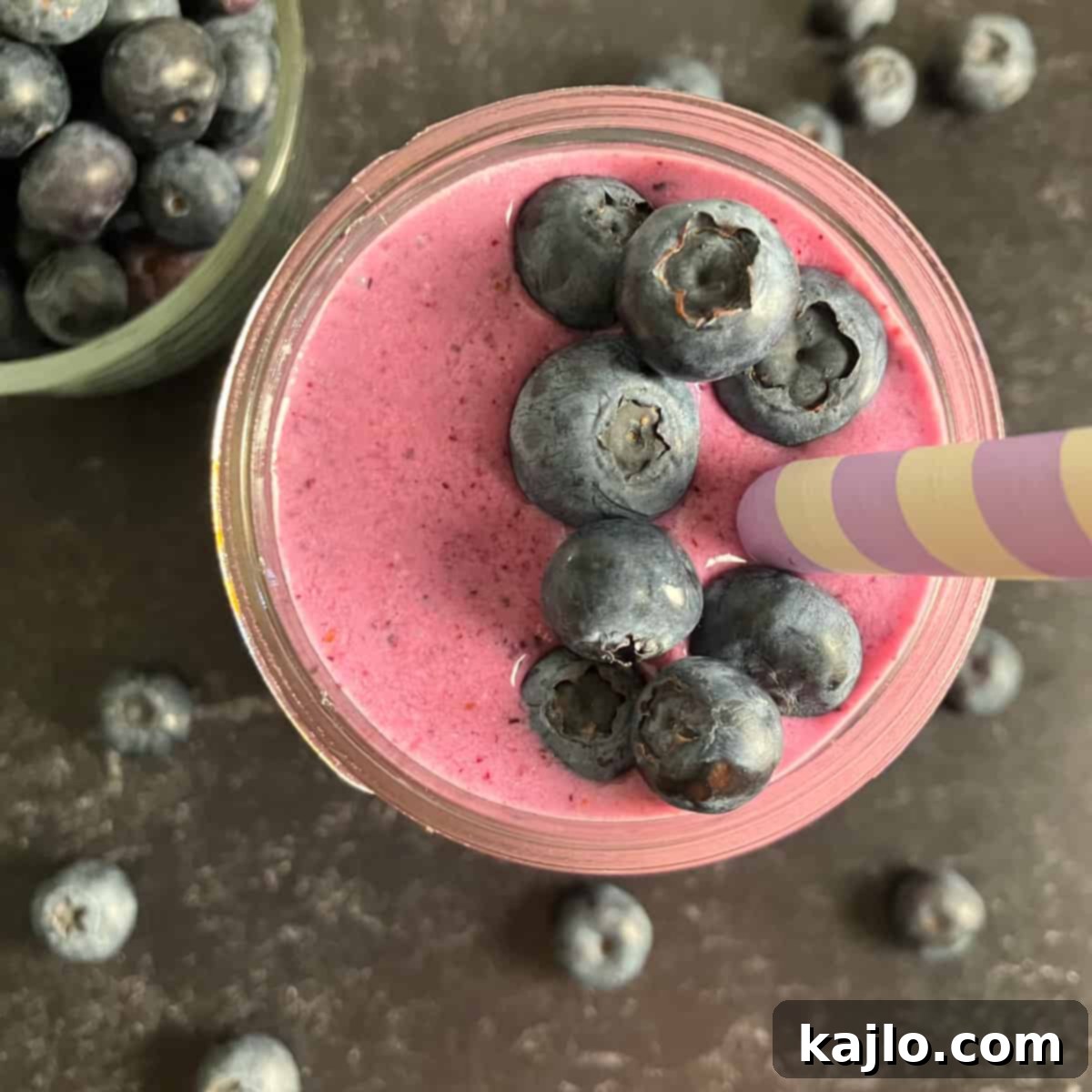
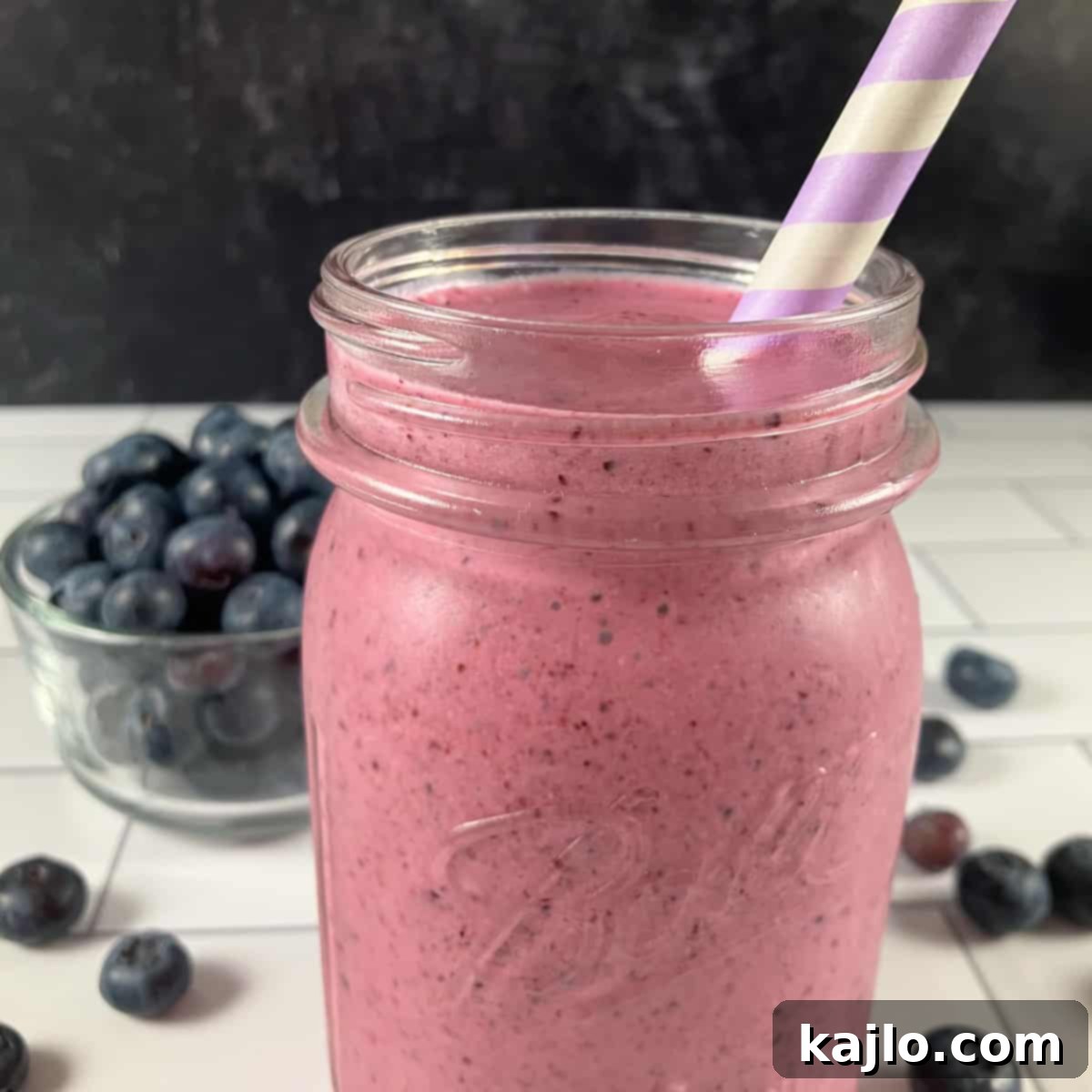
Pour your freshly blended smoothie into tall glasses or stylish wide-mouth mason jars. Serve immediately to enjoy its optimal cold and creamy texture. Wide straws are recommended for easy sipping, especially with thicker smoothies.
🌡 How to Save Your Smoothie for Later
While this peach blueberry smoothie is best enjoyed fresh, you can certainly repurpose any leftovers! The ideal way to save leftover smoothie is by transforming it into delicious ice pops. Simply pour any remaining smoothie into popsicle molds and freeze them overnight. Smoothies tend to melt and separate when stored in the fridge, losing their desired consistency. Freezing them into popsicles ensures you can savor their delightful flavor and nutrients in a fun, frozen form at a later time.
Peach Blueberry Smoothie Recipe
Do blueberries and peaches taste good together? Absolutely! Cool down with this refreshing, high-protein peach blueberry smoothie, featuring an optional hint of lavender for a unique twist.
Prep Time: 5 mins
Total Time: 5 mins
Course: Snack
Cuisine: American
Servings: 2
Calories: 232 kcal per serving
Watch How to Make It!
Click to watch the recipe video
Ingredients
- 1 cup frozen chopped peaches
- 1 cup frozen blueberries
- 1 cup cottage cheese (full fat, 4-6% milkfat recommended for creaminess)
- 2 tablespoons maple syrup (or sugar-free syrup for a no-added-sugar option)
- 6 ice cubes
- 1 cup cold water
- ¼ teaspoon dried culinary lavender (optional, but adds a unique flavor)
Instructions
- Place the frozen blueberries, frozen peaches, cottage cheese, cold water, ice, maple syrup (or chosen sweetener), and optional lavender into a food processor or high-speed blender. Blend until the mixture is completely smooth. To ensure thorough blending, especially of the cottage cheese and ice, blend for a little longer than you typically would for other smoothies.
- Taste the smoothie for sweetness. If you prefer it sweeter, add an additional tablespoon of maple syrup or your chosen sweetener and blend again briefly.
- Pour the freshly made smoothie into two tall glasses or wide-mouth mason jars. Serve immediately with wide straws for the best experience.
- Added Sugar-Free Option with Dates: For a completely natural, added sugar-free option, substitute the maple syrup with 3 pitted Medjool dates. Place the dates in 3 tablespoons of boiling water and let them sit for 10 minutes to soften. Transfer the softened dates and the soaking water to a mini chopper or blender and process until a smooth date paste forms. You may need to scrape down the sides with a spatula a few times. Use this date paste as a direct substitute for the maple syrup in the recipe.
Equipment
- Food Processor (or High-Speed Blender)
- Large-Width Straws (optional, but recommended for thicker smoothies)
Notes: Expert Tips from Dietitian Summer Yule
This is a level 3 recipe (suitable for weight maintenance and active lifestyles). With over 200 calories per serving, this smoothie serves wonderfully as a substantial snack or a component of a light meal. To adjust for lower calorie intake, consider using low-fat cottage cheese instead of the 4% or 6% milkfat variety. Additionally, opting for sugar-free maple syrup instead of real maple syrup will significantly reduce the calorie count.
Cottage cheese remains one of my top recommendations for effortlessly boosting the protein content of smoothies. However, with approximately 14.5 grams of protein per serving, this smoothie might be a bit low in protein to stand alone as a full meal for some. For a more complete small meal, I suggest pairing it with an additional protein source. The smoothie already offers a good balance of carbohydrates from the fruit and healthy fats from the dairy. If your energy needs are higher, you might also consider adding some grain-based foods, such as a slice of whole-grain toast, alongside your smoothie.
I am a big advocate for using dates to add natural sweetness to recipes without resorting to refined added sugars. While dates offer more beneficial nutrients compared to white sugar, it’s important to remember that they are not a lower-calorie option. In fact, Medjool dates can add more calories than a small amount of maple syrup.
If your primary goal is a low-calorie peach smoothie for weight loss, then sugar-free syrup is definitely the way to go. Using sugar-free syrup can save you approximately 40-50 calories per serving compared to traditional maple syrup. Furthermore, it saves about 100 calories per serving when compared to using Medjool dates as a sweetener. Always consider your individual dietary needs and goals when choosing your sweetener.
Nutrition information provided is for one serving of the recipe made with full-fat cottage cheese and real maple syrup.
Nutrition Info Disclaimer
All recipes on this website may or may not be appropriate for you, depending on your medical needs and personal preferences. Consult with a registered dietitian or your physician if you need help determining the dietary pattern that may be best for you.
The nutrition information is an estimate provided as a courtesy. It will differ depending on the specific brands and ingredients that you use. Calorie information on food labels may be inaccurate, so please don’t sweat the numbers too much.
“To taste” means to your preferences, which may have to be visual to follow food safety rules. Please don’t eat undercooked food.
Nutrition Facts (Per Serving)
- Calories: 232 kcal
- Carbohydrates: 32.8g
- Protein: 14.5g
- Fat: 5g
- Saturated Fat: 3g
- Sodium: 400mg
- Potassium: 227mg
- Fiber: 4g
- Vitamin A: 6% DV
- Vitamin C: 142% DV
- Calcium: 18% DV
- Iron: 3% DV
- Cholesterol: 25mg
- Net Carbs: 28.8g (Total Carbs minus Fiber)
- Total Sugar: 26.8g (naturally occurring from fruit, plus any added sweetener)
Keywords
blueberries and peaches smoothie, blueberry and peach smoothie, blueberry peach smoothie, blueberry peach smoothie recipe, lavender smoothie, lavender smoothie recipe, peach and blueberry smoothie, peach blueberry smoothie, peach blueberry smoothie recipe, peaches and blueberries smoothie, healthy smoothie, protein smoothie, summer drink, fruit smoothie, no added sugar
📋 Blueberry Peach Smoothie Calories & Nutritional Breakdown
Understanding the nutritional value of your food is crucial for a balanced diet. One serving of this delicious peach and blueberry smoothie, when prepared with full-fat cottage cheese and real maple syrup, contains approximately:
- 232 calories
- 28.8 grams of net carbohydrates
- 14.5 grams of protein
- 5 grams of total fat
This makes it a satiating option that provides energy, essential macronutrients, and a good dose of fiber from the whole fruits. The protein from the cottage cheese helps to keep you feeling fuller for longer, making it an excellent choice for a snack that supports your energy levels throughout the day.
🥛 Detailed Peach Blueberry Smoothie Nutrition Information
For those who track their intake, here’s a comprehensive nutritional breakdown for one serving of this revitalizing peach blueberry smoothie recipe (values may vary slightly based on specific ingredients and brands):
- Calories: 232 kcal
- Total Fat: 5g
- Saturated Fat: 3g
- Cholesterol: 25mg
- Sodium: 400mg
- Total Carbohydrate: 32.8g
- Fiber: 4g
- Net Carbs: 28.8g (Total Carbs minus Fiber)
- Total Sugar: 26.8g (naturally occurring from fruit, plus any added sweetener)
- Protein: 14.5g
- Vitamin A: 6% Daily Value (DV)
- Vitamin C: 142% Daily Value (DV)
- Potassium: 227mg
- Iron: 3% Daily Value (DV)
- Calcium: 18% Daily Value (DV)
This impressive nutritional profile highlights the smoothie’s benefits, especially its high Vitamin C content, which supports immune function and skin health, and its good fiber and protein contribution for satiety and digestive wellness.
Frequently Asked Questions About Peach Blueberry Smoothies
What fruits blend well with peaches?
Peaches are incredibly versatile and blend beautifully with a wide variety of fruits, making them a fantastic base for many smoothie creations. Beyond blueberries, excellent pairings include bananas, which add extra creaminess and sweetness; juicy mangoes for a tropical flair; crisp pears for a subtle sweetness; vibrant strawberries for a classic berry combo; tart raspberries or blackberries for a complex flavor; and even pitted cherries for a rich, deep fruit taste. Feel free to experiment with your favorites to discover new delicious blends!
How can I make a peach blueberry smoothie with yogurt instead of cottage cheese?
If you prefer using yogurt, you can easily substitute Greek yogurt for the cottage cheese in this recipe. Greek yogurt will also provide a significant protein boost and a wonderfully creamy texture. When making this substitution, you might need to adjust the amount of ice and cold water, as Greek yogurt is typically thicker than cottage cheese. Start with less liquid and add more gradually until you achieve your desired consistency. For an intensified fruit flavor, consider using a peach or blueberry-flavored sweetened Greek yogurt, though this will add to the sugar content.
How do I make a peach blueberry smoothie vegan or dairy-free?
Creating a vegan or dairy-free peach blueberry smoothie is simple! The key is to replace the cottage cheese with a plant-based alternative. You can experiment with various non-dairy yogurts like almond milk yogurt, oat milk yogurt, soy milk yogurt, or coconut milk yogurt, all of which will contribute to the creamy texture. Alternatively, for a lighter, dairy-free option, you could use a splash of orange juice or a plant-based milk (like almond milk or oat milk) in place of the cottage cheese. If you’re aiming for a Whole30 compliant recipe, ensure you use fruit juice in place of both the cottage cheese and any maple syrup, as Whole30 avoids dairy and added sweeteners.
Are blueberry smoothies genuinely healthy?
The healthfulness of a blueberry smoothie largely depends on its ingredients and how it’s prepared, as well as your individual dietary needs. Many commercially prepared smoothies can be loaded with high amounts of added sugar, artificial flavors, and preservatives, making them less ideal choices. However, a homemade blueberry smoothie, like this recipe, can be incredibly good for you, especially when made without added sugar. This particular recipe focuses on whole fruits for fiber and natural vitamins, and incorporates a protein source for satiety. While it’s a very healthy option, it’s worth noting that it may not be suitable for very low-carb or keto diets due to the fruit’s natural sugar content.
How can I adapt this peach blueberry smoothie for a keto or low-carb diet?
To make a keto or very low-carb version of this smoothie, you would need to modify it significantly to reduce the natural sugar from the fruits. The primary change would involve omitting the peaches and reducing the blueberries, as both are higher in carbs. Instead, you could use a minimal amount of low-carb berries (like a few raspberries or blackberries) along with peach extract for flavor. Sugar-free maple syrup would be the ideal sweetener. The cottage cheese is actually compatible with very low-carb diets due to its favorable protein-to-carb ratio, making it a great base. You might also consider adding a spoonful of nut butter or MCT oil for extra healthy fats.
How do I make a low FODMAP blueberry smoothie?
For individuals following a low FODMAP diet, careful selection of ingredients is paramount. While this specific peach blueberry smoothie contains ingredients that might be restricted on a strict low FODMAP diet (peaches and cottage cheese in larger quantities can be high FODMAP), you could adapt a similar concept. A better option might be to refer to a dedicated low FODMAP berry smoothie recipe. For example, a low FODMAP berry smoothie could feature small amounts of blueberries (which are low FODMAP in small servings), strawberries, and raspberries, all of which are generally well-tolerated. Ensure you use unsweetened coconut milk from a can (the thick cream part, not thin beverage milk, as some can be high FODMAP) or lactose-free dairy alternatives. Always consult official low FODMAP guides (like Monash University’s app) for precise serving sizes of fruits and other ingredients.
👩🏻🍳 More Refreshing Peach and Blueberry Smoothie Recipes & Ideas
If you’ve fallen in love with the versatility of frozen peaches and blueberries in smoothies, you’re in for a treat! There are countless ways to incorporate these delicious fruits into your healthy beverage repertoire. Here are a few more recipe ideas and links to inspire your next blend:
- Peach Pineapple Smoothie: For a tropical escape, combine the sweetness of peaches with the tangy zest of pineapple. This combination is incredibly refreshing and can transport you to an island paradise with every sip.
- Keto Berry Smoothie: If you’re looking for a lower-carb option that still delivers on berry flavor, this recipe is a fantastic choice. It focuses on keto-friendly berries and ingredients to keep your carbohydrate count in check while still offering a delightful taste.
- Keto Blueberry Smoothie: Specifically designed for blueberry lovers on a ketogenic diet, this smoothie helps you enjoy the flavor of blueberries with smart substitutions to maintain a low-carb profile. It’s a testament to how creative you can get while adhering to dietary preferences.
Exploring these variations will not only keep your smoothie game exciting but also allow you to tailor your drinks to your specific taste and nutritional requirements. Enjoy the journey of discovering your next favorite blend!
Join our thriving community! Subscribe for all the latest and greatest healthy recipes, and follow me on Facebook, Pinterest, Instagram, and YouTube for daily inspiration and tips!
🛒 Shop our cookbook! Easy Air Fryer Recipes for One
🔥 Burning your air fryer recipes? Here’s how to fix it!