Mastering Kitchen Measurements: Understanding Half of ¾ Cup for Perfect Recipes
In the world of cooking and baking, precision is often the key to success. Whether you’re scaling a family-favorite recipe to serve fewer guests, adjusting a new creation, or simply trying to understand common kitchen conversions, knowing how to accurately determine “half of ¾ cup” is a fundamental skill. This comprehensive guide will demystify this common culinary calculation, offering clear explanations, practical conversions in various units, and essential tips to ensure your measurements are always spot-on. Say goodbye to guesswork and hello to consistently delicious results!
What Exactly is Half of ¾ Cup?
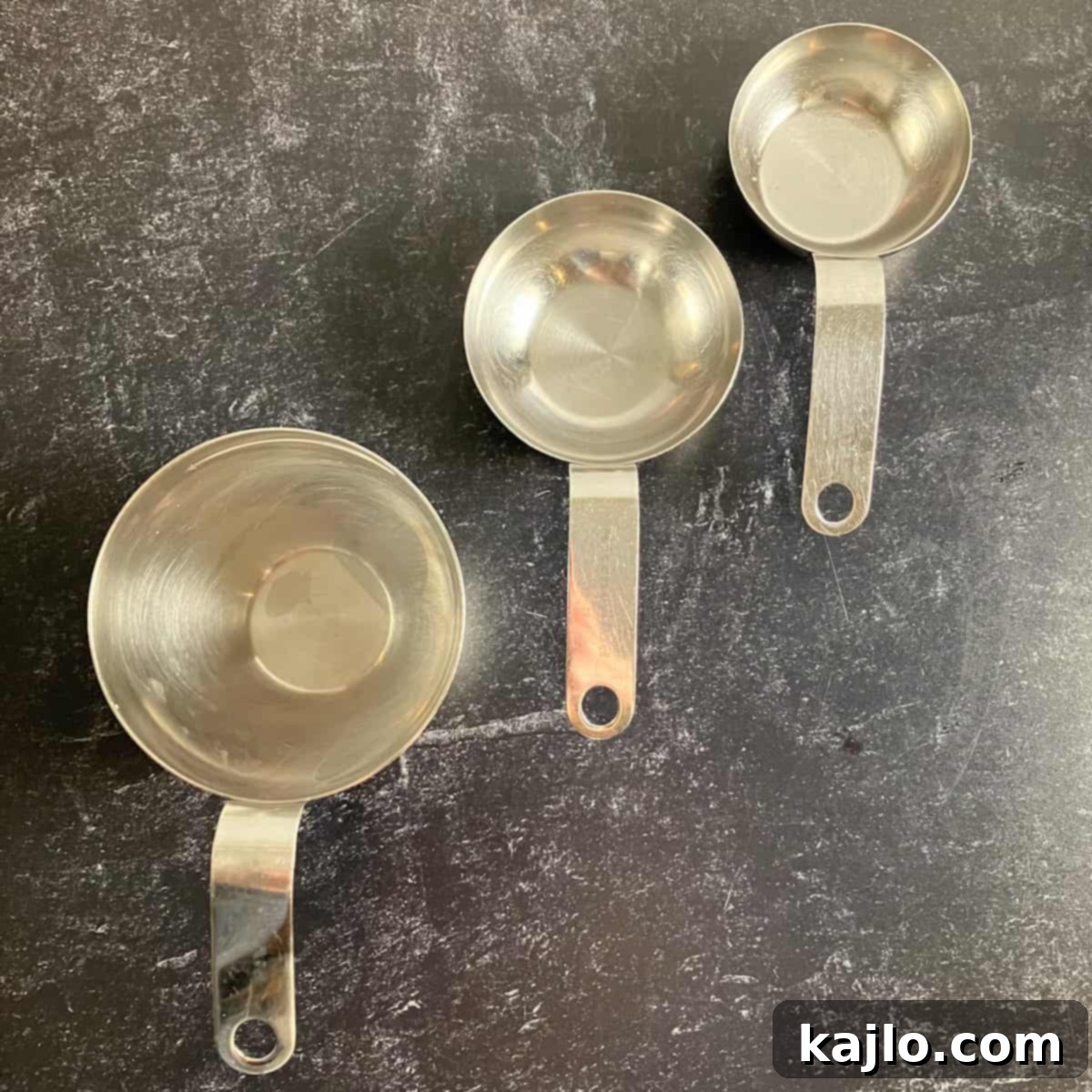
Let’s cut straight to the core conversion: half of ¾ cup is equivalent to 3/8 cup. This foundational understanding is the basis for all other conversions. For those who prefer to measure with common kitchen utensils, this also translates directly to 6 tablespoons, 3 fluid ounces, or 18 teaspoons. Understanding these various equivalencies empowers you to choose the most convenient and accurate measuring tool for any given ingredient.
To arrive at this answer, you simply perform a basic mathematical operation: divide ¾ cup by 2. In fractional terms, this means multiplying ¾ by ½ (¾ × ½). The numerators multiply (3 × 1 = 3) and the denominators multiply (4 × 2 = 8), resulting in 3/8. Imagine ¾ of a pie cut into 8 slices – that’s 6 slices. If you take half of those 6 slices, you’re left with 3 slices, which is 3/8 of the whole pie. This simple fractional math is invaluable for quickly adapting recipes.
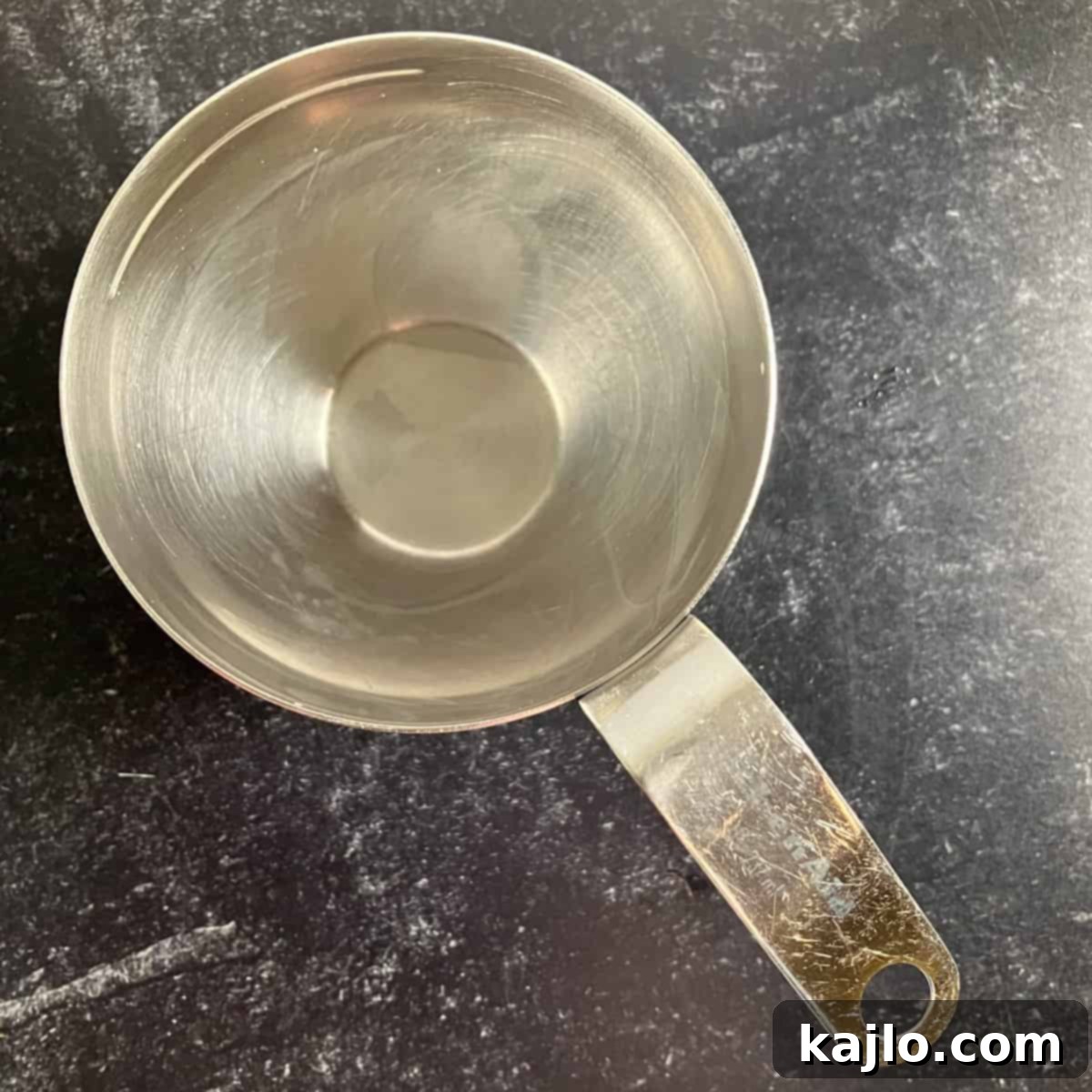
This conversion is particularly critical in baking, where the ratios of ingredients are often a delicate science. A small error in measuring dry ingredients like flour or sugar can significantly alter the texture, consistency, and overall success of your final product. For example, if a cookie recipe calls for ¾ cup of granulated sugar and you’re halving the recipe, accurately measuring 6 tablespoons ensures your cookies maintain their intended sweetness and crispness.
Quick Reference: Half of ¾ Cup in Common Units
For immediate answers and quick kitchen tasks, keep this concise conversion handy:
¾ cup halved = 3/8 cup = 6 tablespoons = 18 teaspoons = 3 fluid ounces
Comprehensive Measurement Conversion Table for Recipe Scaling
Beyond the specific calculation for half of ¾ cup, it’s incredibly useful to have a broader understanding of how various common measurements divide. This section provides an expanded conversion table, allowing you to easily halve, third, or quarter a wide range of quantities encountered in recipes. This tool will become your go-to reference for all recipe adjustments, ensuring accuracy and confidence in your culinary endeavors.
While this table offers precise mathematical conversions, remember that practical application in the kitchen might require using the closest standard measuring tool. Always aim for level measurements for dry ingredients and eye-level readings for liquids for the best accuracy.
| Original Measurement | ½ Measurement | 1/3 Measurement | ¼ Measurement |
|---|---|---|---|
| 1 cup | ½ cup | 1/3 cup | ¼ cup |
| 7/8 cup | ¼ cup + 3 tablespoons | ¼ cup + 2 teaspoons | 3 tablespoons + 1.5 teaspoons |
| ¾ cup | ¼ cup + 2 tablespoons (6 tablespoons) | ¼ cup | 3 tablespoons |
| 2/3 cup | 1/3 cup | 3 tablespoons + 1 2/3 teaspoons | 2 tablespoons + 2 teaspoons |
| 5/8 cup | ¼ cup + 1 tablespoon | 3 tablespoons + 1 teaspoon | 2.5 tablespoons |
| ½ cup | ¼ cup | 2 tablespoons + 2 teaspoons | 2 tablespoons |
| 3/8 cup | 3 tablespoons | 1/8 cup | 1.5 tablespoons |
| 1/3 cup | 2 tablespoons + 2 teaspoons | 1 tablespoon + 2 1/3 teaspoons | 1 tablespoon + 1 teaspoon |
| ¼ cup | 2 tablespoons | 1 tablespoon + 1 teaspoon | 1 tablespoon |
| 1/8 cup | 1 tablespoon | 2 teaspoons | ½ tablespoon |
| 1 tablespoon (tbsp) | 1.5 teaspoons | 1 teaspoon | ¾ teaspoon |
| 1 teaspoon (tsp) | ½ teaspoon | 1/3 teaspoon | ¼ teaspoon |
| ¾ teaspoon | 3/8 teaspoon | ¼ teaspoon | 3/16 teaspoon |
| ½ teaspoon | ¼ teaspoon | 1/6 teaspoon | 1/8 teaspoon |
| ¼ teaspoon | 1/8 teaspoon | 1/12 teaspoon | 1/16 teaspoon |
A Note on Estimations: While this table aims for precision, some fractional teaspoon measurements, like 3/16 teaspoon, are extremely small and may require careful estimation using “a pinch” or “a dash.” The goal is functional accuracy for home cooking.
Understanding Half of ¾ Cup in Various Measurement Formats
Half of ¾ Cup as a Fraction (in Cups)
As we’ve established, when you’re looking for the fractional answer in cups, ½ of ¾ cup is 3/8 cup. This direct fractional result is incredibly useful for maintaining mathematical accuracy, especially when dealing with complex recipes or further scaling. The simple calculation ¾ × ½ = 3/8 addresses all similar queries:
¾ × ½ = 3/8
- What’s half of ¾?
- What’s ¾ cup divided in half?
- Half of ¾ of a cup is how much?
- What’s half of three quarters cup?
All these questions lead back to the same precise fractional answer: 3/8 cup.
How to Measure Half of ¾ Cup in Tablespoons
For many cooks, especially when dealing with smaller volumes, tablespoons are a go-to measurement. Since a standard ¾ cup is equivalent to 12 tablespoons, then half of ¾ cup is exactly 6 tablespoons. This is often the most practical and easiest way to measure this quantity, as most kitchens are equipped with standard tablespoon measures. Alternatively, you could combine ¼ cup (which is 4 tablespoons) and 2 additional tablespoons to reach 6 tablespoons.
What is Half of ¾ Cup in Teaspoons?
Converting to the smallest common unit, ½ of ¾ cup equates to 18 teaspoons. While numerically correct, measuring out 18 individual teaspoons of an ingredient can be cumbersome and significantly increase the margin for error, particularly with dry ingredients. For such volumes, it’s almost always preferable to use the 6-tablespoon equivalent for greater accuracy and efficiency.
Comparing Fractions: Is ¾ Cup Less Than a Half?
A common point of confusion for beginners is comparing fractions. To clarify, ¾ cup is significantly more than ½ cup. If you convert both fractions to a common denominator, such as eighths, ½ becomes 4/8, while ¾ is 6/8. Clearly, 6/8 is greater than 4/8. Think of it in percentages: ½ is 50%, and ¾ is 75%. Therefore, ¾ cup is actually 1.5 times the amount of ½ cup.
Halving Smaller Measures: What is ¾ Teaspoon Divided in Half?
Applying the same principle to smaller units, ¾ teaspoon cut in half equals 3/8 teaspoon. Measuring 3/8 teaspoon can be tricky without specialized fractional measuring spoons. A practical approach is to use a ¼ teaspoon and then estimate by adding a very small amount, or by measuring approximately one and a half times a ¼ teaspoon if precision is critical.
Dividing Mixed Numbers: How to Divide 1¾ Cup in Half?
For mixed number measurements, the process is similar. First, convert 1¾ cup to an improper fraction, which is 7/4 (since 1 whole cup is 4/4, plus ¾ makes 7/4). Then, multiply this by ½: (7/4) × (½) = 7/8. So, half of 1¾ cups is 7/8 cup. This quantity also translates to 14 tablespoons, 42 teaspoons, 7 fluid ounces, or approximately 207 milliliters.
The Right Tools for Accurate Measurement
¾ Cup in Tablespoons: Your Quick Conversion
Just to reiterate for ease of access: ¾ cup is exactly 12 tablespoons. This conversion is one of the most frequently used in the kitchen, simplifying recipe adjustments between different measurement scales.
Effective Ways to Measure ¾ Cup Accurately
Achieving accuracy in your kitchen depends heavily on the ingredient and the tools you use. For dry ingredients like flour, sugar, or cocoa powder, a kitchen scale is the gold standard for precision. Volume measurements can fluctuate based on how an ingredient is scooped or packed. If using a measuring cup, spoon the ingredient into the cup until it overflows, then level it off with a straight edge (like a knife or ruler) without compressing the ingredient (unless the recipe specifies “packed” for ingredients like brown sugar).
For liquid ingredients, always use a clear liquid measuring cup with a spout. Place the cup on a flat, level surface and bend down to view the measurement at eye level. This prevents parallax error, ensuring the liquid’s meniscus accurately aligns with the ¾ cup mark. Many standard liquid measuring cups already feature a convenient ¾ cup fill line.
Weight vs. Volume: Half of ¾ Cup in Grams
One of the most crucial distinctions in precise cooking and baking is the difference between volume (measured in cups, tablespoons) and weight (measured in grams). The density of an ingredient dictates its weight per given volume. Consequently, ¾ cup of flour will weigh significantly less than ¾ cup of honey, even though they occupy the same volume.
Therefore, to answer “What is half of ¾ cup in grams?”, you must specify the ingredient. Below are approximate conversions for half of ¾ cup (which is 3/8 cup or 6 tablespoons) for several common ingredients:
- Half of ¾ cup water: Approximately 90 grams (or 0.09 kilograms). Water’s density is very close to 1 gram per milliliter, making it a good reference point for liquid weights.
- Half of ¾ cup granulated sugar: Approximately 72 grams. This is also precisely 6 tablespoons by volume.
- Half of ¾ cup butter: Approximately 84 grams. For butter, it’s often easiest to measure by cutting off the appropriate portion from a stick, as they usually have tablespoon or ounce markings. 6 tablespoons is a common and easy-to-measure quantity.
- Half of ¾ cup peanut butter: Approximately 96 grams. The thick, dense nature of peanut butter means it will weigh more per volume compared to lighter ingredients.
- Half of ¾ cup all-purpose flour: Approximately 45 grams. Flour, when properly spooned and leveled (not packed), is quite light. This is a prime example where a kitchen scale provides far superior accuracy compared to volume measurements.
- Half of ¾ cup chocolate chips: Approximately 84 grams. The weight can vary slightly depending on the size and type of chocolate chips, but this provides a good average estimate.
For the utmost consistency in baking, particularly with dry ingredients, investing in a reliable digital kitchen scale is highly recommended. It eliminates inconsistencies arising from varying packing densities and ensures reproducible results every time.
International Conversions: Half of ¾ Cup Globally
While US customary units are common in many American recipes, culinary practices worldwide utilize various measurement systems, including the metric system (prevalent in the UK, Australia, Canada, and Europe) and slightly different imperial units. Understanding how ½ of ¾ cup translates across these international systems is vital for tackling global recipes with confidence.
Here is a detailed kitchen conversion chart illustrating ½ of ¾ cup (based on a US Customary Cup) in various international units:
| Measuring System / Unit | ½ of ¾ Cup (US Customary) Value |
|---|---|
| US Teaspoons (t, tsp) | 18 |
| US Tablespoon (T, Tbsp) | 6 |
| US Legal Cup | 0.370 |
| Metric Tablespoon | 5.915 |
| Metric Cup | 0.355 |
| Imperial Teaspoon | 14.988 |
| Imperial Tablespoon | 4.996 |
| Imperial Cup | 0.312 |
| Imperial Pints | 0.156 |
| Imperial Gallons | 0.020 |
| Australian Teaspoon | 17.744 |
| Australian Tablespoon | 4.436 |
| Milliliters (mL) | 88.721 |
| Liter (L) | 0.089 |
| Cubic Centimeters (cc) | 88.721 |
| Cubic Meters | 8.8721e-5 |
| Cubic Inches | 5.414 |
It’s important to note the subtle differences in cup definitions (e.g., US Customary Cup ≈ 236.59 mL; US Legal Cup ≈ 240 mL; Metric Cup = 250 mL; Imperial Cup ≈ 284 mL). These variations, though seemingly minor, can have an impact on the final outcome of delicate recipes, making awareness of the source recipe’s origin beneficial.
Frequently Asked Questions About Kitchen Measurements
What is half of ¼ cup in cooking?
Half of one quarter cup is 2 tablespoons. This also equals 1/8 cup, 6 teaspoons, 1 fluid ounce, or approximately 30 milliliters. This is a very common small measurement used frequently in dressings, sauces, and small-batch desserts.
What is half of ½ cup?
Half of ½ cup is simply ¼ cup. This convenient conversion translates to 4 tablespoons, 12 teaspoons, 2 fluid ounces, or roughly 60 milliliters. It’s one of the most straightforward halving tasks in the kitchen.
What is half of 1/3 cup?
Half of 1/3 cup results in 1/6 cup. Practically, this can be measured as approximately 2 2/3 tablespoons, 8 teaspoons, 1 1/3 fluid ounces, or about 39 milliliters. While a 1/6 cup measuring cup isn’t standard, using spoons makes this achievable.
What is half of 2/3 cup?
Half of 2/3 cup is exactly 1/3 cup. This is equivalent to 5 1/3 tablespoons, 16 teaspoons, 2 2/3 fluid ounces, or around 79 milliliters. This conversion is often easy since 2/3 cup and 1/3 cup are common measuring cup sizes.
Is there a ¾ cup measuring cup?
Yes, specialized ¾ cup measuring cups are available, either sold individually or as part of comprehensive measuring cup sets. They can be incredibly convenient for frequent use. If you don’t own one, you can easily achieve ¾ cup by combining a ½ cup measurement and a ¼ cup measurement.
How to make ¾ cup with ½ cup?
To measure ¾ cup using only a ½ cup measuring tool, you would fill the ½ cup measure one and a half times. This means you first fill it completely, and then fill it halfway again. This method works well for both liquid and dry ingredients.
Why Accurate Kitchen Conversions Matter for Culinary Success
Beyond simply understanding the numerical conversions, appreciating the impact of accurate measurements is vital for consistent culinary success. In baking, especially, recipes are often a delicate balance of chemical reactions where ingredient ratios directly influence rise, texture, moisture, and flavor. Even slight deviations when scaling a recipe can lead to a dense cake, overly crumbly cookies, or a flat bread. In cooking, while there’s often more room for creative improvisation, precise measurements ensure consistent flavor profiles and desired consistencies, allowing you to reliably replicate your favorite dishes and avoid unexpected outcomes.
Conclusion: Master Your Measurements, Master Your Kitchen
Learning how to accurately determine “half of ¾ cup” is more than just a simple calculation; it’s a foundational skill that empowers you to confidently adapt recipes and achieve culinary perfection. From understanding the basics of fractional math to navigating various units like tablespoons, teaspoons, grams, and milliliters, this guide has equipped you with comprehensive knowledge. Embrace your kitchen tools, understand the unique properties of your ingredients, and never hesitate to adjust recipes to fit your needs. With these skills, your cooking and baking journey will be filled with greater precision, confidence, and, most importantly, delicious results. Happy cooking!
Explore More Essential Measurement Conversions
If you found this guide on how much is half of ¾ cup valuable, deepen your kitchen measurement expertise with these other helpful articles:
- 8 Ounces to Cups Conversion
- How Many Teaspoons in a Cup
- 150 mL to Cups
- How Many Ounces in a Gallon
- How Many Tablespoons in ¼ Cup
Stay Connected for Culinary Inspiration! Subscribe to our community for the freshest recipes, tips, and culinary insights. Follow us on Facebook, Pinterest, Instagram, and YouTube to join our growing family of food enthusiasts!
Half of ¾ Cup Video Guide