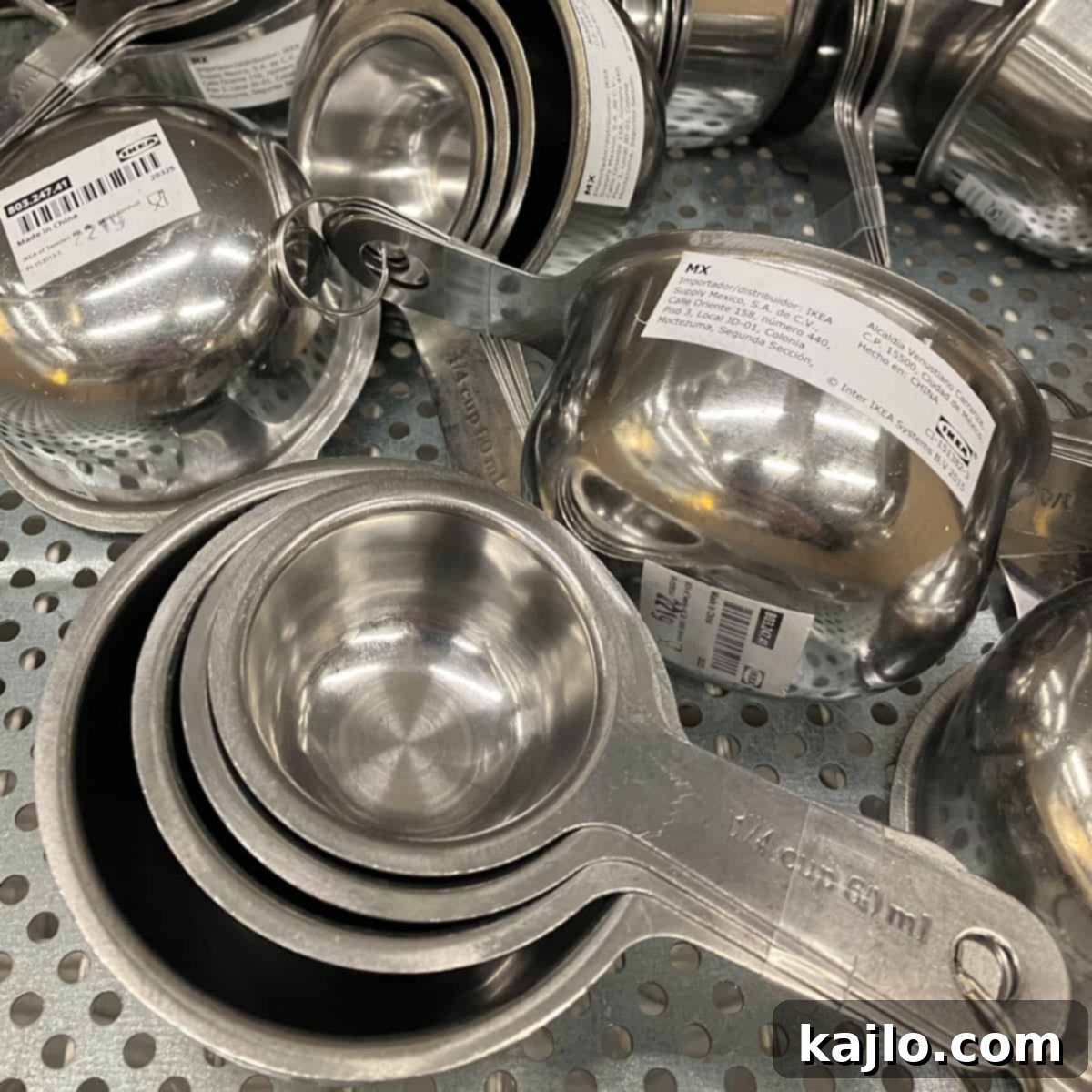
Comprehensive Guide to Teaspoons in a Cup: Essential Kitchen Conversions
Navigating the world of kitchen measurements can sometimes feel like solving a complex puzzle, especially when recipes call for different units. One of the most common and often confusing conversions involves understanding how many teaspoons are in a cup. Whether you’re a seasoned chef or a beginner baker, mastering this fundamental conversion is crucial for achieving perfect results every time. In the realm of US customary units, the simple answer is: there are 48 teaspoons in one cup.
But this article offers much more than just a number. We’ll dive deep into the intricacies of kitchen measurements, providing you with a complete teaspoon to cup conversion chart (tsp to cup) that’s useful for both liquid and dry ingredients. You’ll learn the best practices for accurate measuring, differentiate between various types of teaspoons, and understand how these conversions fit into international cooking standards. Get ready to elevate your cooking and baking precision!
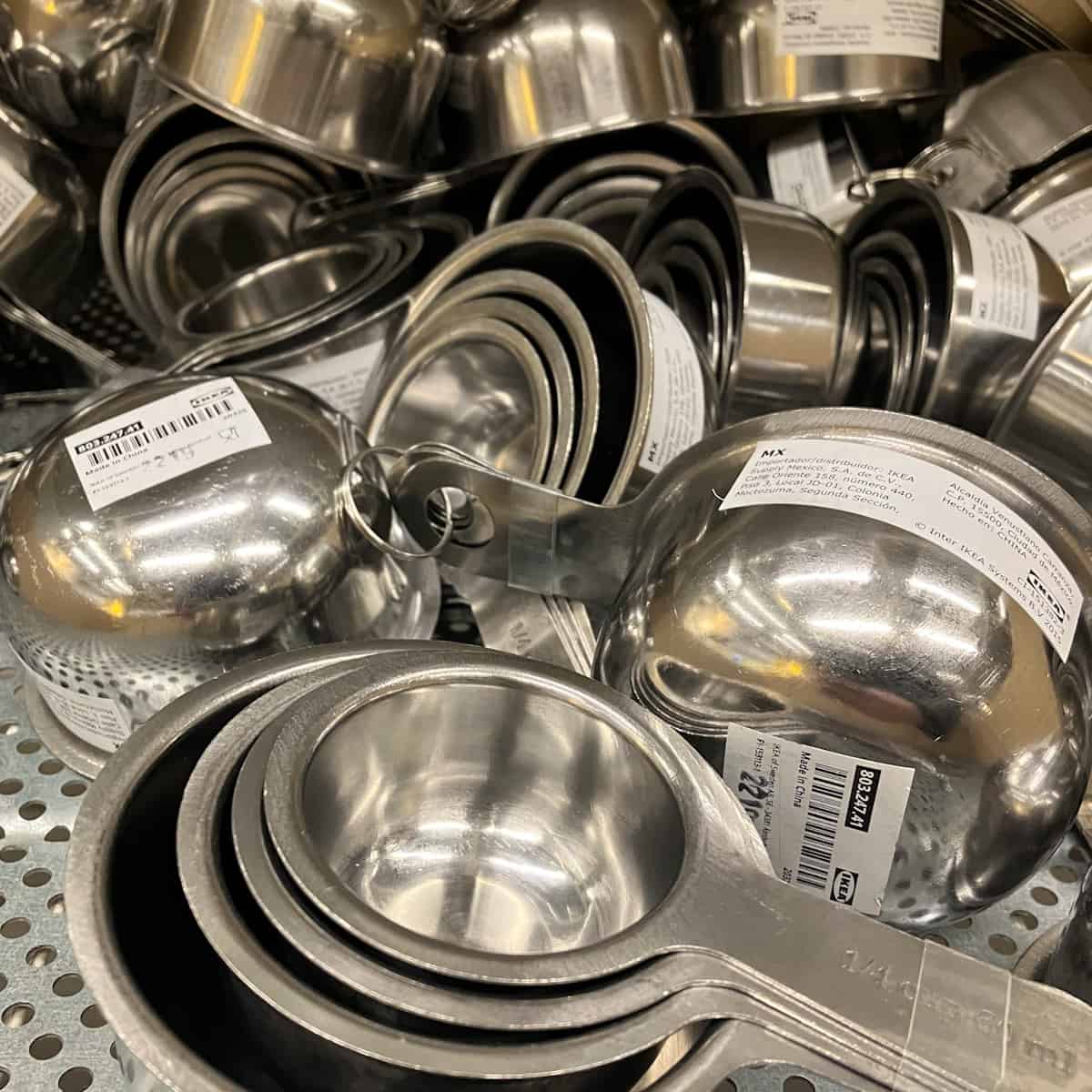
Understanding Fundamental Kitchen Units: Cup and Teaspoon
Before we delve deeper into conversions, let’s establish a clear understanding of the two primary units we’re discussing: the cup and the teaspoon.
What is a Cup? According to the Collins Dictionary, a cup (abbreviated as ‘c’) is a standard unit of volume measurement widely used in cooking and baking, particularly in the United States. In the US Customary System, one cup is equivalent to:
- ½ pint
- 8 fluid ounces (fl oz)
- 16 tablespoons (Tbsp)
- 48 teaspoons (tsp)
Understanding these equivalences is the first step towards accurate measurement in the kitchen.
What is a Teaspoon? A teaspoon (abbreviated as ‘t’, ‘tsp’, ‘tsps’, or ‘tspn’) is a smaller unit of volume measurement also commonly used in culinary applications. It’s often used for smaller quantities of ingredients, such as spices, extracts, or leavening agents. In relation to other units, a teaspoon typically equals:
- 1/48 of a cup
- 1/6 of a fluid ounce
- 1/3 of a tablespoon
The precision offered by teaspoons is invaluable for ingredients that can significantly impact the final flavor or texture of a dish, where even slight deviations can alter the outcome.
Mastering Measuring Techniques for Perfect Results
Accuracy in measurement is paramount, especially in baking, where the balance of ingredients is crucial for chemical reactions and structural integrity. The way you measure your ingredients with a teaspoon can make a significant difference.
Level Teaspoons: The Standard for Precision
When a recipe calls for a “teaspoon,” it almost always refers to a level teaspoon. This means the dry or liquid ingredient completely fills the measuring spoon, right up to the brim, with no excess. For dry ingredients like flour, sugar, or baking powder, achieving a level teaspoon involves:
- Scooping the ingredient into the spoon.
- Using a flat edge, such as the back of a butter knife or a straight-edged spatula, to sweep across the top of the spoon, removing any excess material. This ensures the ingredient is perfectly flush with the spoon’s rim.
For liquid ingredients, simply fill the spoon until it reaches the top edge, being careful not to spill. Always measure liquids over a bowl or sink to catch any drips.
Understanding Rounded and Heaping Teaspoons
While most recipes specify level measurements, you might occasionally encounter terms like “rounded teaspoon” or “heaping teaspoon,” particularly in older or less precise cooking recipes where exact quantities are less critical.
- A rounded teaspoon implies that there’s a small, rounded mound of dry ingredient on top of the spoon, slightly exceeding the rim. This is an imprecise measurement, generally closer to 1.5 level teaspoons, but it varies depending on the ingredient and the person measuring.
- A heaping teaspoon takes this further, meaning you’ve picked up as much of the ingredient as physically possible, creating a substantial mound above the spoon’s edge. This is highly inaccurate and can be roughly equivalent to two or more level teaspoons.
For consistency and best results, especially in baking, it’s always advisable to use level measurements unless explicitly stated otherwise. When in doubt, err on the side of caution and use a level teaspoon.
When to Use a Kitchen Scale for Dry Ingredients
For the highest degree of accuracy, especially in professional baking or when following precise recipes, a digital kitchen scale is indispensable for measuring dry ingredients. Volume measurements (like cups and teaspoons) can vary based on how an ingredient is packed or sifted. For instance, a cup of flour can weigh differently if it’s spooned into the cup versus scooped. A kitchen scale measures by weight, eliminating these inconsistencies and ensuring consistent results every time.
The Core Conversion: How Many Teaspoons in One Cup?
The fundamental conversion you need to remember for US customary units is straightforward:
48 teaspoons (tsp) = 1 cup (c)
This conversion holds true for both liquid and dry ingredients when measuring by volume. While the weight of a cup of flour will differ from the weight of a cup of sugar, the *volume* they occupy in a measuring cup remains the same, meaning both will contain 48 teaspoons by volume.
Teaspoon to Cup Conversion Charts for Easy Reference
To help you quickly convert between teaspoons, cups, and fluid ounces, we’ve compiled comprehensive charts. These tables are invaluable tools for scaling recipes up or down, or for simply double-checking your measurements.
Teaspoons to Cups and Fluid Ounces
This table illustrates how many US Customary cups and fluid ounces correspond to various numbers of teaspoons. Note that cup values are rounded for practical use.
| Teaspoons (tsp) | Dry US Cups (c) | Liquid Measurement (fl oz) |
|---|---|---|
| 1 | 0.021 | 0.167 |
| 3 | 0.063 | 0.5 |
| 6 | 0.125 | 1 |
| 9 | 0.188 | 1.5 |
| 10 | 0.208 | 1.667 |
| 12 | 0.250 | 2 |
| 16 | 0.333 | 2.667 |
| 18 | 0.375 | 3 |
| 21 | 0.438 | 3.5 |
| 24 | 0.5 | 4 |
| 36 | 0.75 | 6 |
| 48 | 1 | 8 |
| 96 | 2 | 16 |
| 192 | 4 | 32 |
| 384 | 8 | 64 |
| 768 | 16 | 128 |
Cups to Teaspoons and Tablespoons
Conversely, if your recipe lists ingredients in cups and you need to convert them to smaller units, this chart provides the equivalent number of teaspoons and tablespoons. Teaspoon and tablespoon values are rounded for convenience.
| US Cups (c) | Teaspoons (tsp) | Tablespoons (Tbsp) |
|---|---|---|
| 1/8 | 6 | 2 |
| 1/4 | 12 | 4 |
| 1/3 | 16 | 5.333 |
| 1/2 | 24 | 8 |
| 2/3 | 32 | 10.667 |
| 3/4 | 36 | 12 |
| 7/8 | 42 | 14 |
| 1 | 48 | 16 |
| 2 | 96 | 32 |
| 4 | 192 | 64 |
| 8 | 384 | 128 |
| 16 | 768 | 256 |
| 32 | 1536 | 512 |
Common Kitchen Conversions Demystified
Beyond the core cup-to-teaspoon conversion, many other common measurement questions arise in the kitchen. Let’s break down some of these frequently asked conversions.
Teaspoons and Tablespoons: A Close Relationship
Understanding the relationship between teaspoons and tablespoons is fundamental:
- How many teaspoons in a tablespoon? There are 3 teaspoons (tsp) in 1 tablespoon (Tbsp). This means 1 teaspoon is equal to 1/3 of a tablespoon.
- Does 2 tablespoons equal 1 teaspoon? No, this is incorrect. Two tablespoons actually equal 6 teaspoons, since 1 Tbsp = 3 tsp.
Converting Fractional Cups to Teaspoons
Often, recipes will call for fractions of a cup. Here’s how these translate to teaspoons:
- How many teaspoons in ¼ cup? A quarter cup contains 12 teaspoons.
- How many teaspoons in ½ cup? Half a cup holds 24 teaspoons.
- How many teaspoons in ¾ cup? Three-quarters of a cup equals 36 teaspoons.
- How many teaspoons in 1/3 cup? One-third of a cup is equivalent to 16 teaspoons.
- How many teaspoons in 1/8 cup? An eighth of a cup is precisely 6 teaspoons.
- What is half of ¼ cup in teaspoons? Half of ¼ cup is 1/8 cup, which equals 6 teaspoons.
- How many teaspoons in 2/3 cup? Two-thirds of a cup contains 32 teaspoons. This is also equivalent to 10 2/3 tablespoons.
Tablespoon to Cup Equivalents
For larger quantities, understanding tablespoon to cup conversions is very useful:
- How many tablespoons in a cup? One cup equals 16 tablespoons.
- Does 8 tbsp equal 1 cup? No, 8 tablespoons is exactly half of a cup (½ cup).
- Is 2 tablespoons half a cup? No, 2 tablespoons is much smaller. It takes 8 tablespoons to make ½ cup. Two tablespoons equals 1/8 cup.
- Does 2 tablespoons equal a ¼ cup? No, 2 tablespoons equals 1/8 cup. For a ¼ cup, you would need 4 tablespoons.
- One quarter cup is how many tablespoons? One-fourth cup equals 4 tablespoons.
Understanding Larger Volume Conversions (Pints, Quarts, Gallons, Liters)
Sometimes you need to convert between even larger units:
- How many teaspoons in a pint? There are 96 teaspoons in a pint.
- How many teaspoons in 2 cups? Since one pint equals two cups, there are also 96 teaspoons in 2 cups.
- How many teaspoons in a quart? One quart contains 192 teaspoons.
- How many teaspoons in a gallon? A full gallon is equivalent to 768 teaspoons.
- How many teaspoons in a liter? For metric conversions, one liter contains approximately 202.88 teaspoons.
International Measurement Systems: Navigating Global Recipes
While the US Customary System is prevalent in American recipes, it’s important to recognize that other measurement systems exist globally. The Imperial system (used in the UK) and the Metric system (used widely in Canada, Australia, and many other countries) have different definitions for cups and even teaspoons. This is crucial when following recipes from international sources, as a “cup” in one country might not be the same volume as a “cup” in another.
Comparing Teaspoons and Cups Across Systems
Here’s a comparison of how the volume of 48 US Customary teaspoons translates to cups in various international units, along with other key metric conversions:
| Unit of Measurement | Equivalent to 48 US Customary Teaspoons |
|---|---|
| US Customary Cup | 1 |
| US Legal Cup (for nutrition labeling) | 0.986 cups |
| Metric Cup (250 mL) | 0.946 cups |
| Imperial Teaspoon (smaller than US tsp) | 39.968 Imperial tsp |
| Imperial Cup (larger than US cup) | 0.833 Imperial cups |
| Australian Teaspoon (5 mL, same as metric) | 47.318 Australian tsp |
| Australian Tablespoon (20 mL) | 11.83 Australian Tbsp |
| Milliliters (mL) | 236.588 mL |
As you can see, a “cup” is not a universal measurement. Always be mindful of the origin of your recipe to ensure you’re using the correct measuring tools and conversion standards.
Ingredient-Specific Measurement Insights
A common question is whether the “teaspoons in a cup” conversion changes based on the ingredient. The simple answer is no; when we discuss volumetric measurements, 48 teaspoons will always equal 1 cup, regardless of the ingredient, be it sugar, flour, butter, or water. What changes is the *weight* of these ingredients, not their volume.
Sugar, Flour, Butter, Water, Oil: Consistency is Key
- How many teaspoons in a cup of sugar? There are 48 teaspoons in a cup of sugar.
- How many teaspoons of flour are in a cup? A cup of flour contains 48 teaspoons.
- How many teaspoons in a cup of water? There are 48 teaspoons in 1 cup of water.
- How many teaspoons of oil are in one cup? For oil, like other liquids such as cocoa powder or baking soda (when measured by volume), there are 48 teaspoons in 1 cup.
Special Notes on Butter and Coffee
- How many teaspoons in a cup of butter? There are 48 teaspoons in one cup of butter. This is also equivalent to 16 tablespoons, or 2 standard sticks of butter (as one stick of butter usually equals ½ cup or 8 tablespoons).
- How many tablespoons in a cup of butter? There are 16 tablespoons in 1 cup of butter, which is the equivalent of 2 sticks of butter.
- How many teaspoons in a cup of coffee? When measuring the *volume* of brewed coffee, there are 48 teaspoons in a cup. However, for brewing coffee, the typical ratio is 1-2 tablespoons of coffee grounds per ¾ to 1 cup of water, depending on desired strength. This is about 3-6 teaspoons of grounds per cup of water.
Remember, while the volumetric conversions remain constant across ingredients, the weight will vary significantly. Always refer to specific ingredient instructions in recipes, especially for baking, where weights are often preferred for accuracy.
Conclusion: Master Your Measurements, Master Your Kitchen
Understanding “how many teaspoons in a cup” is more than just memorizing a number; it’s about gaining confidence and precision in your cooking and baking endeavors. With 48 teaspoons making up one US customary cup, you now have the foundational knowledge to accurately measure ingredients, scale recipes, and even navigate different measurement systems.
By employing proper measuring techniques, utilizing conversion charts, and understanding the nuances of various kitchen units, you’re well-equipped to achieve delicious and consistent results every time you step into the kitchen. Happy cooking!
Further Measurement Conversions and Resources
If you found this guide helpful for converting cups to teaspoons, you might also be interested in exploring these other measurement-related articles:
- 150 mL to Cups Conversion
- How Many Ounces in a Gallon: A Complete Guide
- How Many Tablespoons in ¼ Cup: Quick Kitchen Facts
- 8 Ounces to Cups Conversion Made Easy
- How Much is 3oz Chicken: Understanding Protein Portions
Join our community! Subscribe for all of the latest and greatest recipes, and follow me on Facebook, Pinterest, Instagram, and YouTube!